Show Posts

This section allows you to view all posts made by this member. Note that you can only see posts made in areas you currently have access to.

Messages - dannyno

Pages: [1]
1
On that basis, shouldn't the rectangular speed camera warning signs like the one below be unlawful when they are placed on roads with no speed cameras? If that's not misleading I don't know what is.
<br>
<br>
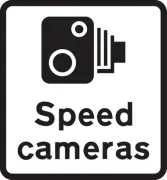


Is that technically a "warning sign"?  Warning signs, in the Highway Code, are usually (not always) triangular with red borders. I think this is an informationsign.

https://www.highwaycodeuk.co.uk/information-signs.html

Also, I don't think it actually means "there are definitely speed cameras here".  I think it means, as the site above says, that you're entering an area where speed cameras are used. Could that include temporary or mobile ones?

2
Non-motoring legal advice / Re: TFL’s 60+ Oyster card
« on: October 08, 2025, 02:08:52 pm »
Just to add a different point, OP says the TFL website appears not to work. This is vague. It would be more helpful to know what exactly is going wrong. But perhaps, as was pointed out, this isn't really a legal question!

3
Non-motoring legal advice / Re: Parking
« on: October 06, 2025, 01:08:30 pm »

As others have said, there isn't enough information here for meaningful advice.

What I'm hearing is a sense of injustice: some employees seem to use this space without any problem, but you (OP) have not only been told not to use it, but told that doing so would be contrary to the employee Code of Conduct.

So one question is: what part of the code of conduct are you being threatened with?  Failure to follow a reasonable management instruction is a common provision in such a code.  Or perhaps the code even has a provision dealing with car parking.  Either way, we need to know what it says and what exactly has been said (verbally? in writing?).

Is there anything in your contract of employment relating to car parking?  Or anything in corporate policies about it?  Employers have wide latitude for controlling employer behaviour contractually.  There is nothing in principle, as far as I know, that would prevent them from instructing employees where they were allowed to park during working hours, and they may be able to do so outside working hours if doing so would damage or be a risk to the company somehow.   But we don't know whether there are real issues about parking where you want to park, or whether management are making it up for some reason.

If there are lots of employees, I could imagine car parking in the area being controversial with local residents or visitors, and complaints from them might be a reason for a policy. And it seems to be that it wouldn't be an unreasonable management instruction to ask employees not to park in such a way as to cause complaints.

And these other car parkers?  Do they have allocated spaces too, or not?  I could imagine a company telling employees to use their private car park during working hours, if they have a space allocated, so as not to take spaces away from either members of the public or other employees who don't have an allocated space. 

"Unfairness" isn't necessarily something you can take an employer to employment tribunal over. Not all unfairness is unlawful - you'd need to show that you've been treated unfairly because of a protected characteristic. For example, being able to park outside the car park but closer to the exit might be a reasonable adjustment due to disability.

But it could be grounds for internal grievance if a policy is being applied inconsistently (but we don't know if there is such a written policy, or that it is being applied inconsistently - the sparse info provided leaves this open).

4
That’s a good question. The Equality Act 2010 applies here through the Public Sector Equality Duty (PSED) in section 149. Local authorities making homelessness decisions are carrying out a public function, so they must have “due regard” to:

eliminating discrimination,

advancing equality of opportunity for disabled people, and

fostering good relations.

Case law has made it clear that this isn’t a box-ticking exercise. For example, in Pieretti v Enfield LBC [2010] EWCA Civ 1104, the Court of Appeal confirmed that the PSED applies to individual homelessness decisions, including intentional homelessness. If the applicant has a disability, the council must properly investigate the impact and show how it weighed that factor when reaching its decision.

Other cases like Bracking v Secretary of State for Work & Pensions [2013] EWCA Civ 1345 explain that the PSED requires a conscious and rigorous focus — decision letters need to demonstrate the duty was applied in practice, not just referred to in passing.

So in a situation where someone has long-term health conditions (physical or mental) that affect their ability to cope with homelessness, the authority has to factor that in when deciding whether a finding of intentionality is proportionate. If they don’t, the decision can be unlawful.

Mmm.  But how does the Equality Act or the Public Sector Equality Duty apply to your friend in this case?   You haven't mentioned that they have any relevant protected characteristics or long-term physical or mental health conditions.

5
I notice you've mentioned the Equality Act.  How does the Equality Act apply?

6
I suppose if anything is going to be misconfigured, it's a council website.

7
With my Computing lecturer hat on, I see no cause for concern. An IP address does not identify an individual (both factually and legally, according to case law from file sharing cases). Unless you've specifically paid for a fixed one and never use a mobile device or a different wifi network, they can change arbitrarily.

Although you are of course correct that an IP address doesn't identify an individual, on its own, it is regarded as an "online identifier" under GDPR, and "online identifiers" do legally constitute personal data. 

An IP address, combined with other information, can after all be used to distinguish one person from another, and thus to identify an individual.

After all, if you think about it, a name doesn't identify an individual.   There are thousands of John Smiths, to take the usual example.  But combine the name with an address, or a telephone number, or height, or birthdate, and you can tell one from John Smith from another and thus identify an individual.

The point being that "personal data" isn't necessarily data that identifies a person on its own.

8
Although the points made about IP address "collection" being both technically unavoidable and incapable of identifying an individual are valid, isn't it nevertheless blindingly obvious that there are circumstances where information about IP addresses which have accessed a website could still provide an organisation with evidence about whether or not a particular individual has accessed it? 

After all, if nobody at all has accessed the website, that would logically prove that no specific individual has accessed it.

Alternatively, if the only people to access the website are people from within the organisation's own IP range, that would show that no individual outside the organisation has accessed it.


9
Non-motoring legal advice / Re: HMRC Tax Rebates
« on: September 19, 2025, 04:58:53 pm »
I don't think this is true.

You can claim refunds via the Government website: https://www.gov.uk/tax-overpayments-and-underpayments/if-youre-due-a-refund

Fairsfair are a company who will act as an intermediary and charge for that service. There is no need to use them at all.

No mention of them here: https://www.gov.uk/tax-overpayments-and-underpayments/if-youre-due-a-refund

I am skeptical that HRMC directed anyone to use an intermediary company - is there any evidence of this?

11
Wouldn't have thought you'd find it pasted up anywhere, no.

Dan

12


I tracked this location down, it was actually taken at 76 Lodge Road:

https://maps.app.goo.gl/57gJcd1MFizV6j4t7 (2024 GSV)

According to GSV, that's about a 30 minute walk from the Indian Night restaurant.

It relates to restrictions around a "Radio 2 In the Park" event in nearby Hylands Park:

https://writtle-pc.gov.uk/wp-content/uploads/2025/08/1_Hasmadedoc-V1.pdf

Both Lodge Road and London Road are named in that. If OP saw no signs, perhaps there were none and the enforcement officer used the one half an hour away!


Dan

13
Non-motoring legal advice / Re: Charity Auction
« on: May 25, 2025, 03:39:45 pm »
My wife bid for and won a silent auction for charity, the proceeds of which go to a  hospice.  The auction was for two EasyJet tickets to anywhere that EasyJet flys.

She looked at the Terms and Conditions and the only exclusions were that you cannot fly on a bank holiday or during school holidays.

She bought them because we want to go to Israel, however when she came to book the flights EasyJet said that Israel is excluded.

Where do we stand.  It appears to me that because there was nothing in the Terms and Conditions about flying to Israel, EasyJet are under an obligation to honour the vouchers.

Can anyone advise please?

Easyjet flights to Tel Aviv have been suspended for a while now.  They were going to resume flights from 1 June, but that is now postponed to July 1.

https://www.easyjet.com/en/help/preparing-to-fly/latest-travel-information

https://www.timesofisrael.com/liveblog_entry/easyjet-postpones-resumption-of-tel-aviv-flights-until-july-1/

Thus, while the charity tickets might be for anywhere to which easyjet flies, Israel is currently not somewhere to which easyjet is flying.


14
That would be the bit that says "Read More Driver who taunted speed camera with sign saying 'No photographs please' as he flicked V-sign is ordered to so road safety course"

Generally, we are here to offer legal advice, rather than teach posters how to read. In general, text based online forums are not ideally suited for such a task, regardless of their overall purpose.

Um, could I gently point out that the "read more" article relates to a different case to the "grandfather of 14" who blocked a speed camera van, and if you actually do the "read more" bit, you can see that it wasn't a court which ordered the driver with the "no photographs please" sign in that case to do a road safety course.  Instead, as we'd expect, they were offered it by the police to avoid penalty points.

The "grandfather of 14" who blocked a speed camera van was not ordered by the court to do a road safety course, but given 120 hours community service and ordered to pay costs and compensation.

15
I'm a bit surprised that nobody has yet made the obvious point that all these citations to the The Companies (Trading Disclosures) Regulations 2008, are to the Regulations as they were originally made.

But the regulations have in fact since been revoked, as it plainly states if you click on the "latest available" link.

They were revoked by The Company, Limited Liability Partnership and Business (Names and Trading Disclosures) Regulations 2015.

https://www.legislation.gov.uk/uksi/2015/17/contents

So what you apparently need to be looking at is part 6 of those regulations.

https://www.legislation.gov.uk/uksi/2015/17/part/6

The requirement to display its registered name at "any such location at which it carries on on business" is still there(22.2).

But there is no requirement stated to display an address.  But then nor was there any such requirement in the previous regulations either.

That leaves the question of whether there is any requirement to have a registered office address on a contract or invitation to contract such as a car park sign.   What's interesting is the list of occasions where a registered name is required to be displayed is lengthy, but the list for an address is limited to business letters, order forms, and websites.  And doesn't include "invoices and other demands for payment" as the list for registered name does.

Pages: [1]