Hi, welcome knowing if should just pay the £25 before 2nd October, or should I go through the appeal process with a hope of wining?...
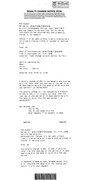
BACKGROUND INFO:1) I received a fine on the car window from the local council for parking in a council-run facility. I attempted to obtain a ticket, but the full registration number was not entered or printed correctly, which resulted in a fine being issued:
2) I submitted an informal challenge to the fine on the basis of the following...
“I am writing to challenge PCN OHXXXXXXXX issued at Tudor Grange car park for some, but not limited to, the reasons indicated below:
A valid ticket was attained by he driver (evidence of token attached), but due to visual impairment, disability and the poor visibility of the machine interface and processing, the car reg was not registered correctly on the token. I believe this constitutes a minor error, considering the parking was within the time frame, a ticket attempt occurred - and that the council importantly has a duty under the Equality Act 2010 to make reasonable adjustments for disabled users. TPT decisions often cite proportionality, fairness, and legitimate expectation—especially when the user made a genuine effort to comply. I respectfully request cancellation of the PCN on grounds of payment made, accessibility barriers, and procedural fairness. Welcome your contact to confirmation of this and response should be via email also to ensure it is received, as not permanently at that address. Thanks."
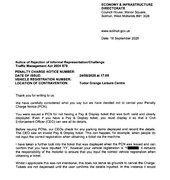
3) I was given this informal response:
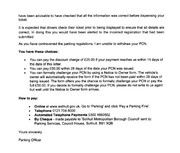
It seems ridiculous for them to fine when an attempt was made for the ticket. The kiosk are very difficult to operate: The machines have response delay, the screens are very hard to see (particularly in bright sunlight or when it’s raining), I am unsure whether these machines meet accessibility and legal compliance requirements?
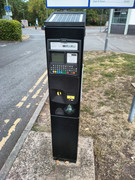
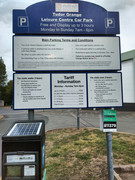
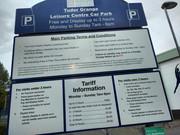
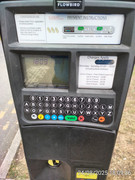
I have gathered some general information about accessibility standards and requirements for such machines (provided below) in case it nudges any thoughts?...
⚖️ Legal Context
In the UK, local councils must ensure parking infrastructure is compliant with:
1. Equality Act 2010
◦ Requires “reasonable adjustments” so that people with disabilities are not placed at a substantial disadvantage compared to non-disabled users.
◦ This applies to physical access (height, reach, tactile buttons) and information access (readability of screens, instructions, contrast, visibility).
2. Public Sector Equality Duty (PSED)
◦ Councils like Solihull have a duty to anticipate and address barriers faced by disabled people.<br>
◦ They must show they considered accessibility in procurement and deployment of machines.<br>
3. BS EN 301 549 (Accessibility requirements for ICT products and services)<br>
◦ A European/UK standard, often applied to public machines. Requires features like audio feedback, tactile controls, screen readability, and compatibility with assistive devices.<br>
4. Traffic Management Act 2004<br>
◦ Covers enforcement of parking rules — councils must ensure that pay-and-display systems are fair, transparent, and reasonably usable.<br>
⚠️ Observed User Interface / Accessibility Issues:
• Small buttons: The keypad buttons are small and flat, which is difficult for people with reduced dexterity (e.g. arthritis, tremors).<br>
• Screen readability: The LCD screen has low contrast and glare, making it hard to read in bright light or for people with sight impairment.<br>
• No audio/tactile feedback: Appears to be visual-only, so people with limited vision would struggle.<br>
• High reliance on fine motor skills: Typing in full registration number with small round buttons is a barrier.<br>
• Payment limitations: Coins only (no card/contactless, no app QR link visible) — disadvantages people who cannot handle coins easily.<br>
• Height & angle: Depending on installation, may not be wheelchair-accessible if keypad/screen is too high.<br>
✅ What Councils Should Ensure
To be compliant and fair, councils like Solihull should check machines against:<
Accessible design guidance (BS 8300, inclusive design in the built environment).
Alternative payment methods: App, phone call, card/contactless.
Screen accessibility: High-contrast, large text, good visibility in sunlight.
Tactile & audio support: Raised lettering on keys, audio prompts, or headphone socket.
Reachability: Installed at a height usable for wheelchair users.
Reasonable adjustments: For those unable to use the machine, ensure there are alternative methods (e.g. pay by phone, permit schemes, disabled exemptions).
🔎 Bottom line:
These machines are likely legal but may not meet accessibility requirements under the Equality Act 2010 and PSED if they are the only way to register for free parking.<br>
Councils must show they considered disabled users’ needs. A “sighted people only” design could be challenged as indirect discrimination.<br>
At minimum, Solihull Council should provide alternative methods (phone/app/online registration) to ensure inclusion.
