Messages - SatnavSam
-
#1 Re: McDonald's Gatwick, MET PCN, Failure to validate ticket
on 12 Jan, 2026 16:48 in Private parking tickets
Thank you all for your help and support.Decision SuccessfulAssessor Name Amy CaffertyAssessor summary of operator caseThe parking operator issued the Parking Charge Notice (PCN) for failing to validate your stay in the car park.Assessor summary of your caseThe appellant has raised the following points from their grounds of appeal • they say keeper liability can’t arise due to the site not being relevant land under Schedule 4 of the Protection of Freedoms Act (PoFA) 2012; • the operator is pursuing the registered keeper of the vehicle as the driver hasn’t been identified but the operator can only transfer liability to the keeper where the land is relevant; • the land subject to statutory control including airport byelaws is excluded from the definition of relevant land set out in PoFA 2012; • they say the site in question is within Gatwick Airport Byelaws boundaries, so the site isn’t relevant land and the keeper can’t be held liable; • they say by asserting keeper liability on such land the operator has made a prohibited and misleading statement contrary to the Private Parking Single Code of Practice (The Code) section 8.1.1(d); • the appellant has provided information regarding what section 8.1.1(d) of The Code states; • they put the operator to strict proof that the location doesn’t lie within the Gatwick Airport Byelaws boundary and that the keeper can be held liable; • they say without such proof, POPLA must find that PoFA 2012 doesn’t apply and that the keeper can’t be held liable; and • once POPLA has concluded that the keeper can’t be held liable, the appeal must be allowed and the PCN cancelled. After reviewing the operator’s evidence, the appellant reiterates their grounds of appeal. The appellant has also provided 2 images showing the airport boundaries and where the site in question is located within the airport boundaries. The above evidence will be considered in making my determination.Assessor supporting rational for decisionI am allowing this appeal, with my reasoning outlined below: It is the parking operator’s responsibility to demonstrate to POPLA that it has issued a PCN correctly. The appellant has argued as part of their appeal that keeper liability can’t arise due to the site not being relevant land under Schedule 4 of PoFA 2012 and how the operator is pursuing the keeper as the driver hasn’t been identified. They say the site in question is within Gatwick Airport Byelaws boundaries, so the site isn’t relevant land and the keeper can’t be held liable. The appellant has provided 2 images showing the airport boundaries and where the site in question is located within the airport boundaries. The driver hasn’t been identified, and the operator must meet the requirements set out in PoFA 2012 to transfer liability to the keeper, but PoFA 2012 can only be used on relevant land. The PCN has been issued on land under statutory control as airport land is not considered relevant land unless the parking operator can demonstrate otherwise. Section 3 (1) (c) of POFA 2012 discusses the relevant land definition below: “3(1)In this Schedule “relevant land” means any land (including land above or below ground level) other than— (a) a highway maintainable at the public expense (within the meaning of section 329(1) of the Highways Act 1980); (b) a parking place which is provided or controlled by a traffic authority; (c) any land (not falling within paragraph (a) or (b)) on which the parking of a vehicle is subject to statutory control.” In this case, I would have expected the operator to not only rebut the grounds of appeal submitted by the appellant but to also rebut the evidence provided. On page four of the operators evidence pack, they say they ‘are confident that there are no applicable airport byelaws relating to parking in effect at this location’, and they explain why. The operators argument appears to state that byelaws do not apply in areas where Road Traffic Enactments apply. They have not been clear on boundaries relating to where Road Traffic Enactments do and do not apply. But in any case, in places where Road Traffic Enactments apply, the land is under the statutory control of the Road Traffic Enactments. I note the operator claims that the only relevant part of the byelaws is the part labelled parking – and that this is in relation to cargo and baggage. However, other areas seek to restrict more general parking activities. For example, the byelaws include: “5(3) Obstruction – Except in an emergency, no person shall leave or park a Vehicle or cause it to wait for a period in excess of the permitted time in an area where the period of waiting is restricted by a Sign.” I am not satisfied that the operator has rebutted the motorist’s reason for appeal or their evidence provided. The operator has provided no evidence to suggest that the boundary set out on the map provided by the appellant is incorrect. That is not to say the site is certainly located within the airport boundary, and different evidence from the operator might have resulted in a different conclusion. But I have made my decision based on the evidence before me. Accordingly, I must allow this appeal. The appellant has raised other grounds in their appeal, but as I am allowing the appeal, it is not necessary for me to address these. -
#2 Re: McDonald's Gatwick, MET PCN, Failure to validate ticket
on 21 Nov, 2025 02:47 in Private parking tickets
Thanks, b789.Have responded as you said. -
#3 Re: McDonald's Gatwick, MET PCN, Failure to validate ticket
on 21 Nov, 2025 02:44 in Private parking tickets
Thank you, b789.Responded as you said. -
#4 Re: McDonald's Gatwick, MET PCN, Failure to validate ticket
on 17 Nov, 2025 16:23 in Private parking tickets
 Thanks, b789. Have now attached. Was not able to edit earlier on my phone.
-
#5 Re: McDonald's Gatwick, MET PCN, Failure to validate ticket
on 17 Nov, 2025 13:21 in Private parking tickets
DWMB2, PM sent. -
#6 Re: McDonald's Gatwick, MET PCN, Failure to validate ticket
on 17 Nov, 2025 12:03 in Private parking tickets
MET's "evidence" to POPLA.Operator NameMET Parking Services - EWOperator Case SummaryIn the appeal to POPLA Mr Sam states that this is not relevant land and PoFA 2012 cannot be applied to hold him liable as the registered keeper. As we have not been provided with the name and address of the driver of the vehicle, we are pursuing the registered keeper under Schedule 4 of The Protection of Freedoms Act 2012. Please see our compliant Notice to Keeper in Section B of our evidence pack. Please also see a full explanation of why we may pursue the registered keeper under Schedule 4 of PoFA 2012 in Section C of our evidence pack. As stated in paragraph 3 of Schedule 4 of the Protection of Freedoms Act 2012, Relevant Land is any land that is not a) a highway maintainable at the public expense, b) a parking place which is provided or controlled by a traffic authority, or c) any land excepting the aforementioned on which the parking of a vehicle is subject to statutory control. Paragraph 3 subsection 3 states that parking is subject to statutory control if any statutory provision imposes a liability in respect of the parking of vehicles on that land. The Gatwick Airport byelaws, which may be viewed online via the link below, do not impose a penalty for vehicles parking within McDonalds: https://www.gatwickairport.com/on/demandware.static/-/Sites-Gatwick-Library/default/dw08f809e7/images/Corporate-PDFs/Regulation/Byelaws 2015 reprint.pdf In light of this, the site is not excluded by the definitions laid out in paragraph 3 of Schedule 4 of the Protection of Freedoms Act 2012 and as such is considered Relevant Land. Turning to the charge itself: As the photographic evidence in section E demonstrates, the driver pressed the button to exit and therefore incurred the parking charge. The signage throughout the site clearly advises motorists of the requirement to use a validated ticket to raise the barrier, and that pressing the button to exit may lead to a charge being issued, as is the case in this instance. Should a motorist approach the barrier and realise it will not accept their ticket they should return to the restaurant to seek assistance from a staff member. By pressing the button to raise the barrier the driver breached the terms and conditions and the charge was duly issued as a result. Please note that there was only a total of 32 charges issued to vehicles for this contravention for the whole of 25/09/2025 (see section E). Had there been an issue with the barrier or validation machines there would have been a significant number of charges issued, as approximately 1500-2000 vehicles visit the premises each day. Our client also did not contact us to inform us of any issues on this date. In line with F.3(g) of the Appeals Charter, we requested evidence of custom as this is a customer-only car park. Mr Sam did not provide the requested evidence and as such he was not entitled to the further discount. PLEASE NOTE: regarding the further reduction of a charge under Annex F, the Sector Single Code of Practice specifically states that ‘in all cases the Appeals Charter would require the motorist to provide the evidence.’. As such, without the appellant providing supporting evidence then there is no requirement for an operator to offer the further reduction. To summarise, the terms and conditions of parking are clearly stated on the signs that are prominently displayed at the entrance to and around the car park. These include that parking is for McDonald’s customers only and that motorists must validate their car park stay in the restaurant with proof of purchase prior to exiting the car park and use their validated ticket to raise the exit barrier. Pressing the barrier button to exit may lead to a charge notice being issued. The photographic evidence in Section E demonstrates that the driver did not use a validated ticket to raise the exit barrier and instead exited the car park by pressing the button on the barrier to raise it. It remains the driver’s responsibility to check the signs where they park and comply with the stated terms and conditions. In light of the above we believe the charge notice was issued correctly and the appeal should be refused.I have 7 days to respond to this. -
#7 Re: McDonald's Gatwick, MET PCN, Failure to validate ticket
on 31 Oct, 2025 12:00 in Private parking tickets
Appeal submitted.Thanks, b789.Now we await POPLA. -
#8 Re: McDonald's Gatwick, MET PCN, Failure to validate ticket
on 30 Oct, 2025 20:19 in Private parking tickets
Got a quick refusal with POPLA code.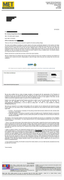
-
#9 Re: McDonald's Gatwick, MET PCN, Failure to validate ticket
on 29 Oct, 2025 18:02 in Private parking tickets
Thanks very much, b789. Will do.Edit: reply sent by email, cc'd to me. -
#10 Re: McDonald's Gatwick, MET PCN, Failure to validate ticket
on 29 Oct, 2025 17:12 in Private parking tickets
Just had response from MET https://postimg.cc/jWKJJ2Txhttps://postimg.cc/jWKJJ2Tx -
#11 Re: McDonald's Gatwick, MET PCN, Failure to validate ticket
on 28 Oct, 2025 19:30 in Private parking tickets
Thank you.Sorry for not replying earlier. I thought I had posted, but obviously not.Appeal sent as above. Awaiting response. Will post back when it arrives. -
#12 Re: McDonald's Gatwick, MET PCN, Failure to validate ticket
on 16 Oct, 2025 21:39 in Private parking tickets
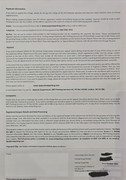
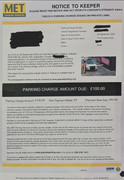
-
#13 McDonald's Gatwick, MET PCN, Failure to validate ticket
on 16 Oct, 2025 21:35 in Private parking tickets
I am the RK of the vehicle and have received this PCN for failure to validate the parking ticket.The driver did not see any information about how to validate the ticket, nor did the staff in the restaurant mention it.Any information on the best way to proceed would be gratefully received -
#14 Re: Lost in translation: good job I left The Valleys years ago.
on 15 Nov, 2024 17:11 in The Flame Pit
Relevance of a 16 year old article? -
#15 Re: DVLA sending me a cheque!
on 05 Nov, 2024 19:17 in The Flame Pit
Quote from: John U.K. on 05 Nov, 2024 17:22Some online bank accounts (e,g, NatWest) allow one to pay it in online with a photograph of the cheque.As do Lloyds.